

Procalcitonin (PCT), the biomarker of choice to aid in the diagnosis of sepsis
Radiometer has developed the easy-to-use, point-of-care AQT90 FLEX procalcitonin assay, an important aid to timely diagnose sepsis. Sepsis is a serious and potentially life-threatening condition. There are more cases of sepsis than of lung-, breast-, prostate cancer and HIV combined [1].
Procalcitonin (PCT), normally present in the blood at a very low level, and is released in larger amounts in response to an infection, thereby acts as a risk indicator for sepsis. With a negative predictive value above 95 %, procalcitonin is widely acknowledged as the most sensitive biomarker to aid in the diagnosis of bacterial sepsis [2].
The added value of point-of-care testing
Despite strict guidelines for the implementation of early and effective therapies which have improved the chance of survival [3], the mortality and morbidity rates associated with sepsis remain higher than any other infection-related condition.
Radiometer’s rapid, acute care AQT90 FLEX PCT test, an in vitro diagnostic assay for the quantitative determination of procalcitonin in EDTA or lithium-heparin whole blood or plasma specimens, is an important tool for acute and intensive care professionals, aiding the detection of sepsis. This enables clinicians to start antibiotic treatment undelayed.
When procalcitonin levels are elevated and sepsis is suspected but not confirmed, antibiotic treatment should be considered after first having drawn a blood sample to identify the presence of any blood-borne microorganisms. Typically, this will involve blood culture, a time-consuming procedure that may take several days and often does not reflect systemic inflammation or the onset of organ failure. In contrast, Radiometer’s AQT90 FLEX PCT assay delivers results in less than 21 minutes, enabling clinicians to swiftly optimize the patient’s treatment [2].
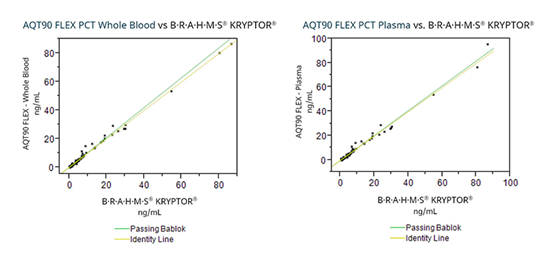
Key benefits of the AQT90 FLEX procalcitonin assay include:
- laboratory quality, quantitative determination of PCT at the point of care
- results available in less than 21 minutes
- improved sample turnaround times
- suitable for whole blood – no prehandling required – or plasma samples
- excellent agreement with blood culture
- high correlation with other commercially available PCT assay